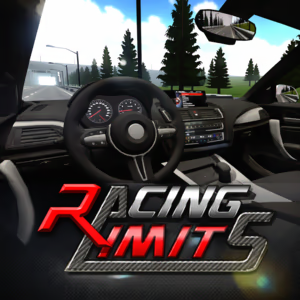
Racing Limits puts you behind the wheel in a nonstop traffic challenge. Master every lane change, and push your driving skills to the limit.
Exciting Gameplay in Racing Limits
Racing Limits begins with a simple idea: put the player behind the wheel and let the road become the challenge. There is no traditional racing circuit waiting at the finish line. Instead, the road stretches ahead through busy traffic, and every vehicle becomes part of an unpredictable race against speed, distance, and reaction time.
The real excitement comes from overtaking. Cars and trucks move along the road, leaving only brief openings for a daring driver to slip through. At low speed, these gaps seem easy to read. Push the accelerator harder, however, and the entire road starts to feel different. A safe opening can disappear in a moment, turning an ordinary lane change into a split-second decision.
Racing Limits offers both one-way traffic and two-way traffic, giving players different levels of pressure. One-way roads provide more room to plan an overtake because vehicles travel in the same direction. Two-way traffic changes the story completely. Cars can approach from the opposite direction, forcing you to judge speed, distance, and timing before making a move.
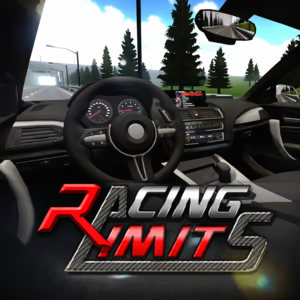
Get behind the wheel of Racing Limits
How to Play Racing Limits
The objective is straightforward: control your car, navigate through traffic, maintain your speed, and complete the challenge without losing control. The simplicity of the objective is part of the game's appeal. Learning to accelerate takes seconds, but learning when to accelerate is where the real experience begins.
Controls
On PC, the controls are designed to keep every important action within quick reach:
- Up Arrow - Accelerate
- Down Arrow - Brake
- Left / Right Arrow - Steer
- C - Change camera view
- F - Nitro boost
- E - Horn
- W - Shift gear up in Manual Mode
- D - Shift gear down in Manual Mode
- ESC - Pause or exit the race
Manual Mode adds another layer of control for players who want to become more involved in the driving experience. Instead of relying entirely on automatic shifting, you can manage the gears yourself and decide how the car responds to changing speeds.
Tips for New Players
New drivers should resist the temptation to stay at maximum speed from the beginning. Start by learning how traffic moves and practice changing lanes when the road is clear. Smooth steering is often more useful than sudden movements, especially when two-way traffic is active.
Keep an eye on the vehicles ahead rather than focusing only on the car directly in front of you. Looking further down the road gives you more time to identify gaps and prepare your next move. Save the nitro boost for moments when the road opens up, rather than activating it immediately after every turn.
Most importantly, learn from failed overtakes. In Racing Limits, a crash is not simply an ending. It shows exactly where your timing, positioning, or speed control needs improvement.
Four Main Modes in Racing Limits
Racing Limits gives the road a different purpose through four main game modes: Career Mode, Infinite Mode, Against-Time, and Free Mode.
Career Mode provides structured challenges that give each drive a clear objective. It is a natural starting point for players who want their progress to feel connected to a larger journey.
Infinite Mode removes the pressure of reaching a specific destination. The road continues, and your goal is to travel as far as possible while staying in control. Every successful overtake adds another moment to the run.
Against-Time turns the road into a race against the clock. Speed becomes essential, but reckless driving can cost valuable seconds through collisions or missed opportunities.
Free Mode offers a more relaxed experience. With fewer pressures surrounding the drive, it gives players room to explore the road, test different approaches, and become familiar with the car.
Together, these modes allow Racing Limits to move between structured racing challenges and open-ended driving sessions without changing its central identity.
The Camera System in Racing Limits
Speed feels different depending on where you see it from. That is why Racing Limits includes multiple camera perspectives, allowing players to experience the road from different angles.
A closer driving perspective can make traffic feel immediate, with vehicles appearing larger and gaps between lanes becoming more intimidating. A third-person perspective provides a broader view of the car and its surroundings, making it easier to judge nearby traffic and plan lane changes.
On PC, pressing C switches between available camera views. This simple feature can significantly change how you approach the same stretch of road. A player struggling with a particular perspective may discover that another camera provides a better sense of distance and positioning.
Where the Road Leads Next
Racing Limits is built around the tension between speed and control. Its roads do not need traditional racing circuits to create pressure because the traffic itself becomes the opponent. Every lane change tells a small story, every gap demands a decision, and every increase in speed shortens the time available to react.
For players who enjoy browser racing games but want a different kind of challenge, the journey can continue with Moto X3M. While Racing Limits places the focus on traffic, speed, and changing lanes from multiple driving perspectives, Moto X3M takes a more stunt-focused approach. Its side-view presentation turns the road into a sequence of ramps, obstacles, flips, and dangerous landings. The two games therefore create very different visual experiences: Racing Limits puts you behind the wheel and into the flow of traffic, while Moto X3M turns the entire course into a stunt playground.
Both offer a fast ride, but they tell their stories from completely different angles. Play now!